

Easy Brown Gravy Recipe (No Drippings, 30 Minutes)
Easy brown gravy recipe with butter, flour, and beef broth. Rich, smooth, and ready in 30 minutes, no drippings needed. Perfect over mashed potatoes.
TLDR: cook equal parts butter and flour in a skillet until the roux turns a deep brown, slowly whisk in beef broth, stir in Worcestershire sauce and a few simple seasonings, then simmer for 5 to 7 minutes until the gravy coats the back of a spoon.
That’s the whole recipe. It’s the gravy I want on mashed potatoes, meatloaf, pork chops, and roast beef, and it works just as well on a random Tuesday as it does on Thanksgiving. It’s also forgiving. If it gets too thick, add a splash of broth. If it’s too thin, simmer it a little longer.
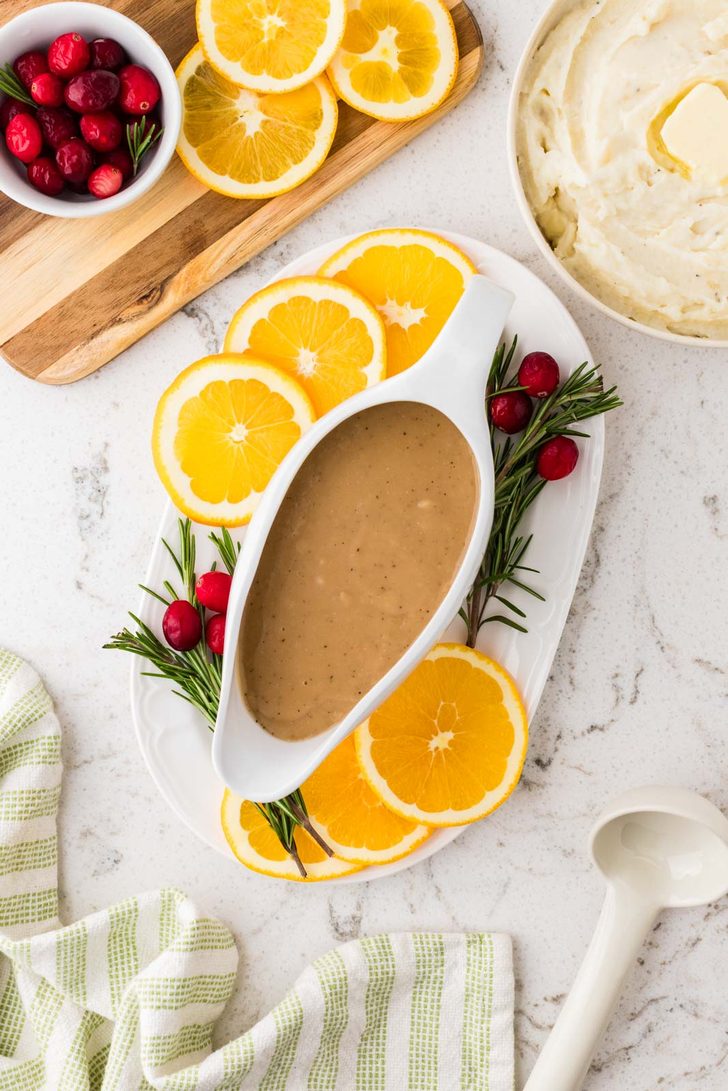
Below you’ll find everything I’d want to know before making gravy: what each ingredient does, how dark to make the roux, how to fix lumps or thin gravy, what to do with leftovers, and how to make it ahead.
Why You’ll Love This Brown Gravy
- Ready in 30 minutes. Five minutes of prep and about 25 at the stove.
- No drippings needed. You don’t have to roast anything to make it.
- Simple ingredients. Butter, flour, beef broth, and seasonings you already have in the pantry.
- Smooth and glossy. Whisk in the broth a little at a time and you’ll never see a lump.
- Makes about 2¼ cups. That’s 8 to 9 servings of ¼ cup each.
- Make-ahead friendly. It keeps in the fridge for 3 to 4 days and freezes for up to 3 months. (Sometimes I freeze cubes of gravy in my Souper cube tray!)

What You’ll Need to Make Brown Gravy
The full measurements are in the recipe card below. Here’s what each ingredient does and where you can swap.
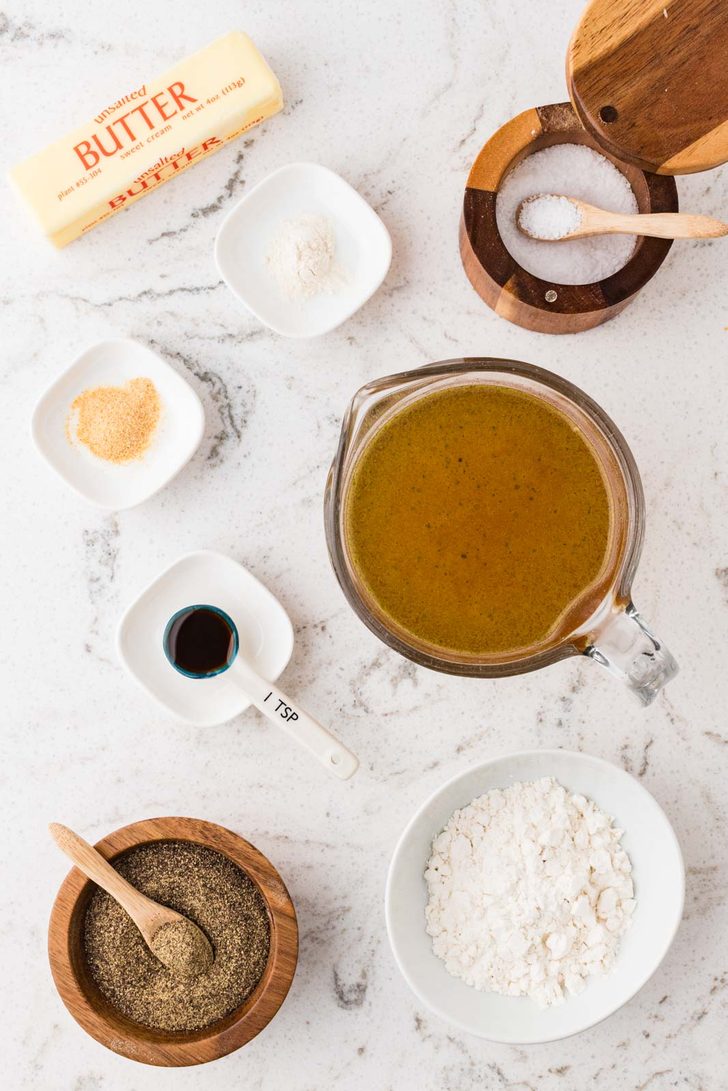
- Unsalted butter: Makes the rich base of the gravy and cooks with the flour to form the roux. Salted butter works too, but you may need to cut back on the added salt.
- All-purpose flour: Thickens the gravy and gives it that classic smooth texture. A cup-for-cup gluten-free flour blend can work, though the thickness varies from brand to brand.
- Beef stock or broth: This is where the savory beef flavor comes from. Stock usually gives a richer flavor and darker color, but a good-quality broth works well too. Low-sodium is easiest because you control the salt.
- Worcestershire sauce: Adds savory depth and makes the beef flavor taste fuller without taking over.
- Onion powder: A mellow onion flavor with no chopping and no chunks.
- Garlic powder: A subtle garlic note that makes the broth taste more developed.
- Black pepper: A little warmth to balance the richness.
- Salt: Brings the flavors together. How much you need depends on how salty your broth is, so taste at the end.

Equipment
- Measuring cups and measuring spoons
- A skillet. The wide surface gives the roux room to brown evenly and makes it easy to see the color change.
- A whisk. Use a silicone whisk if your skillet has a ceramic coating.
- A wooden spoon
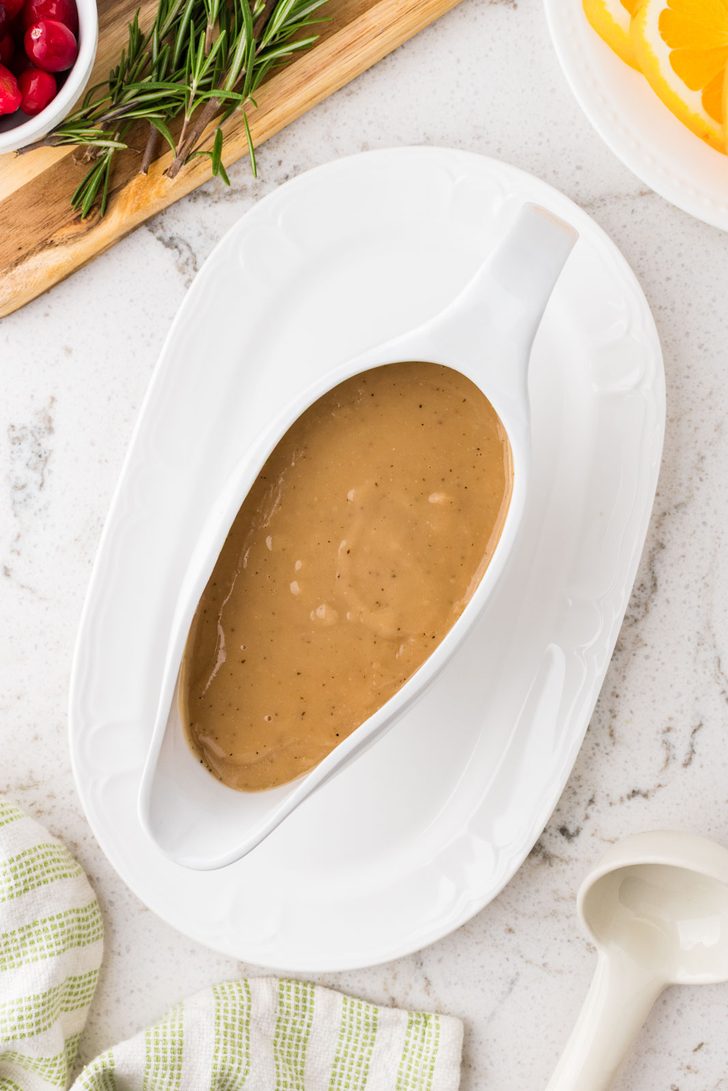
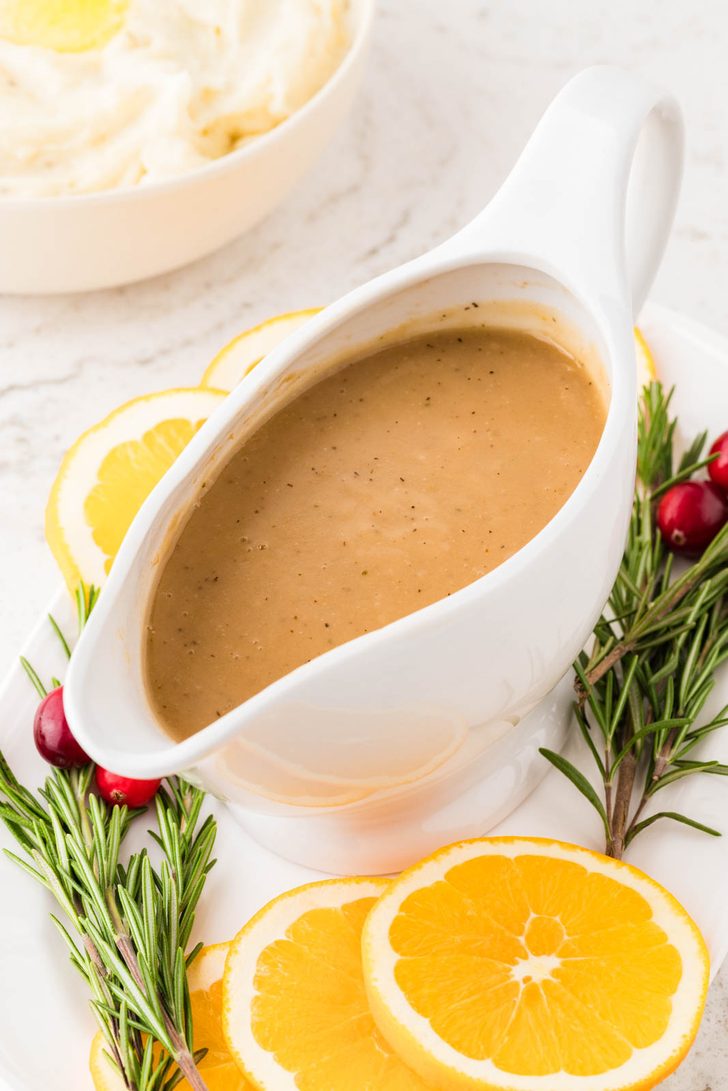
- A gravy boat, for serving
- Optional: a fine-mesh strainer, in case you want to rescue a lumpy batch

How to Make Brown Gravy
There are only five steps, and the roux is the one that matters. Take your time with it.
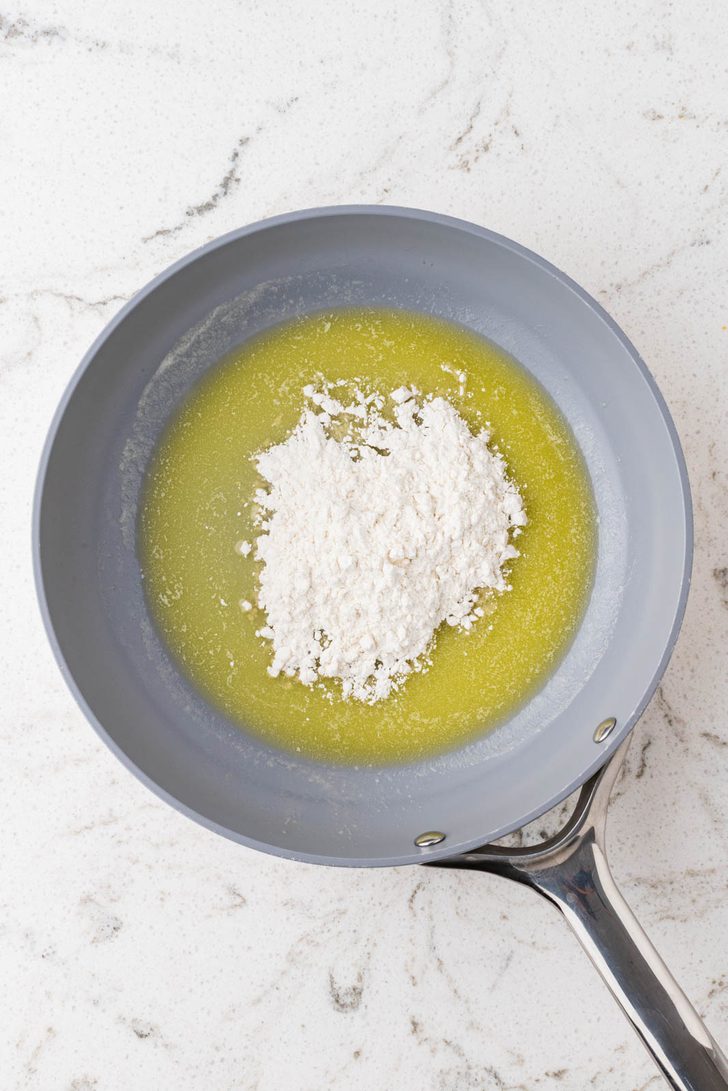
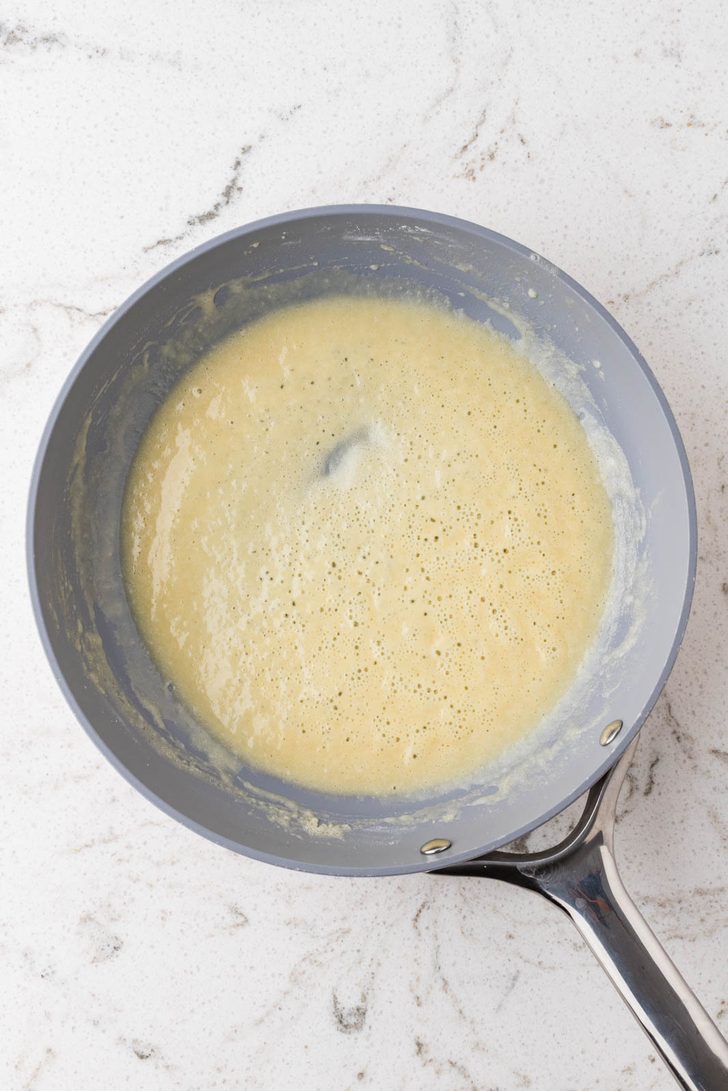
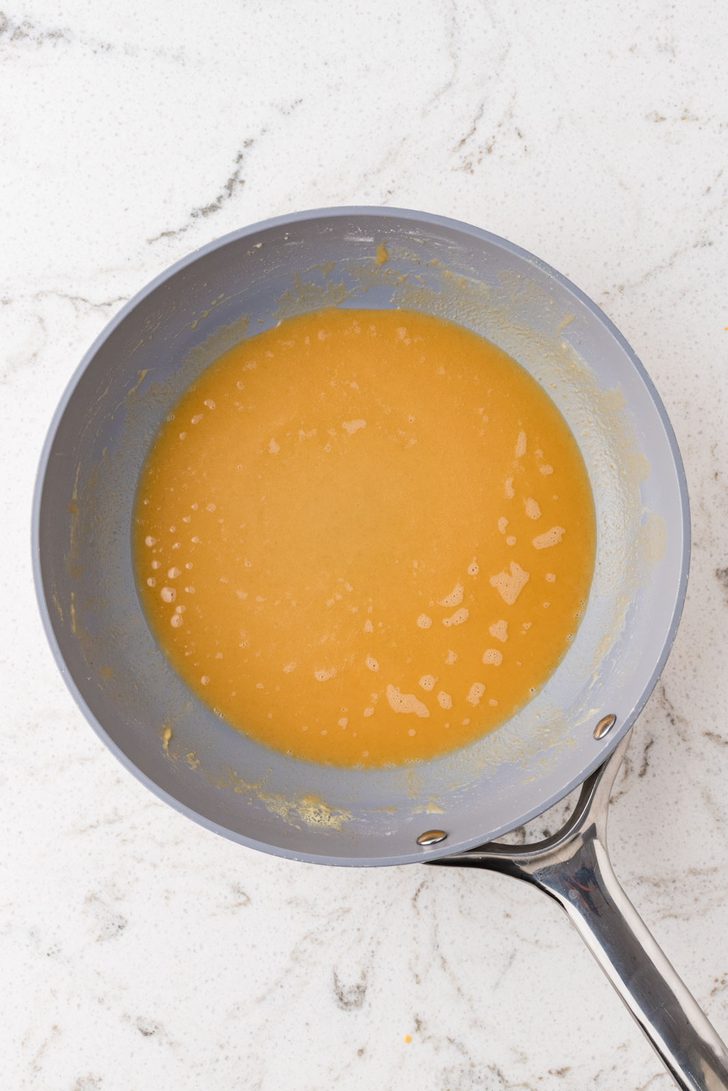
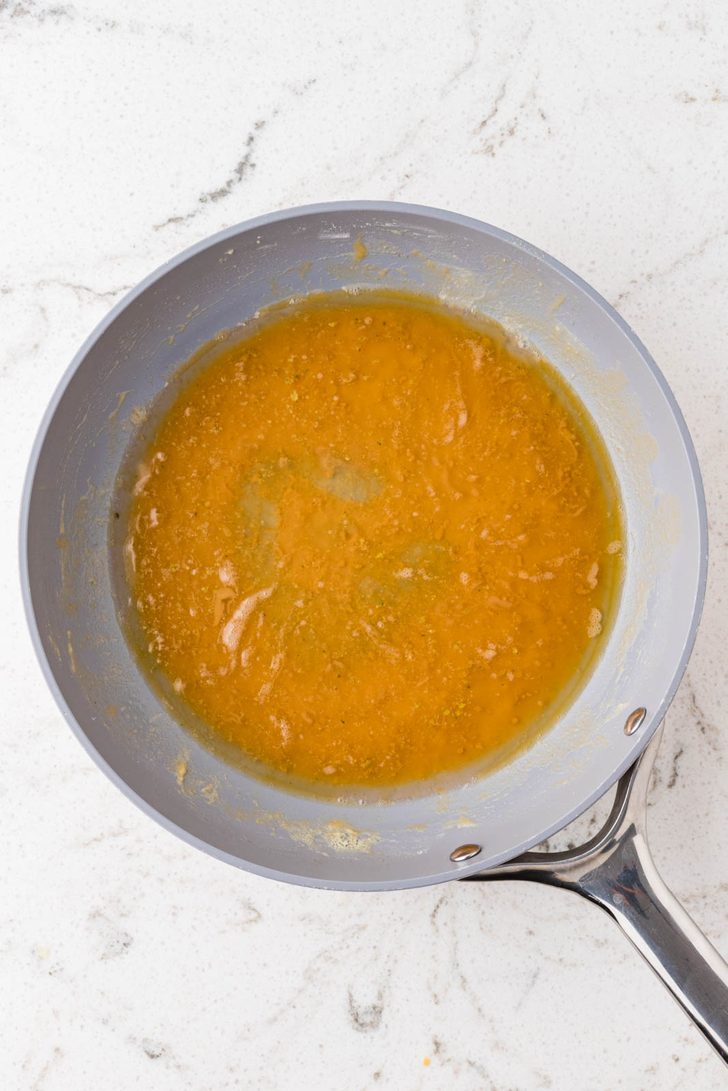
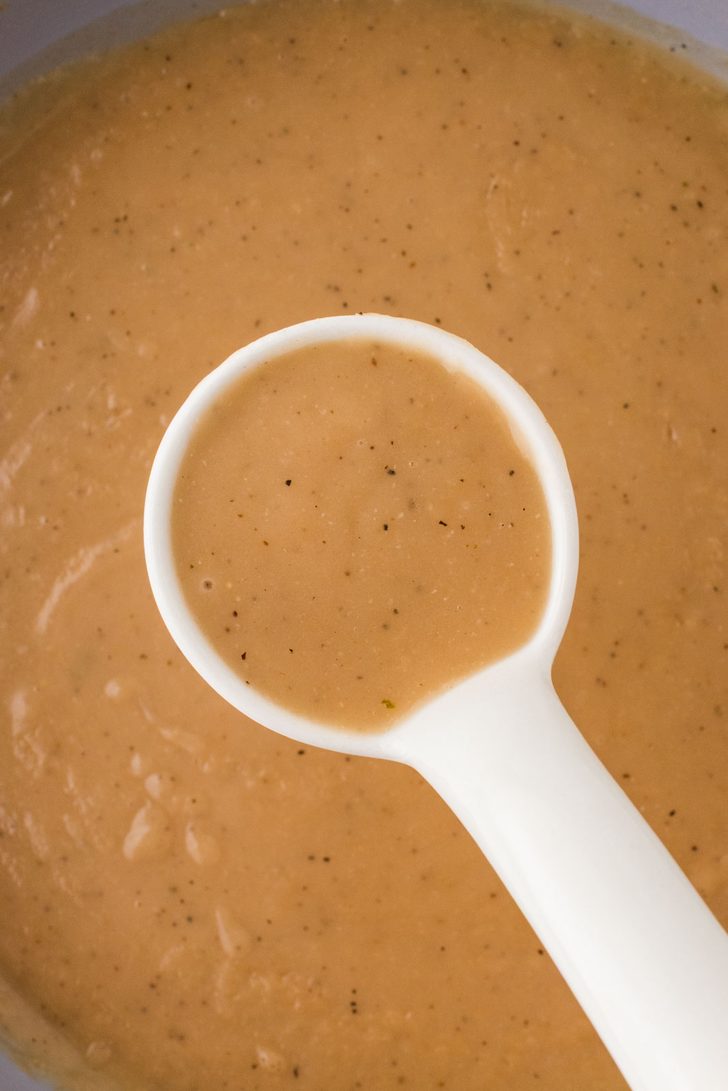
- Brown the roux. Melt the butter in a skillet over medium heat. Add the flour and whisk, scraping the bottom of the pan as you go. The longer you cook the roux, the darker your gravy gets, so keep stirring and don’t walk away. It usually takes around 10 minutes to reach a deep brown, but go by color, not the clock.
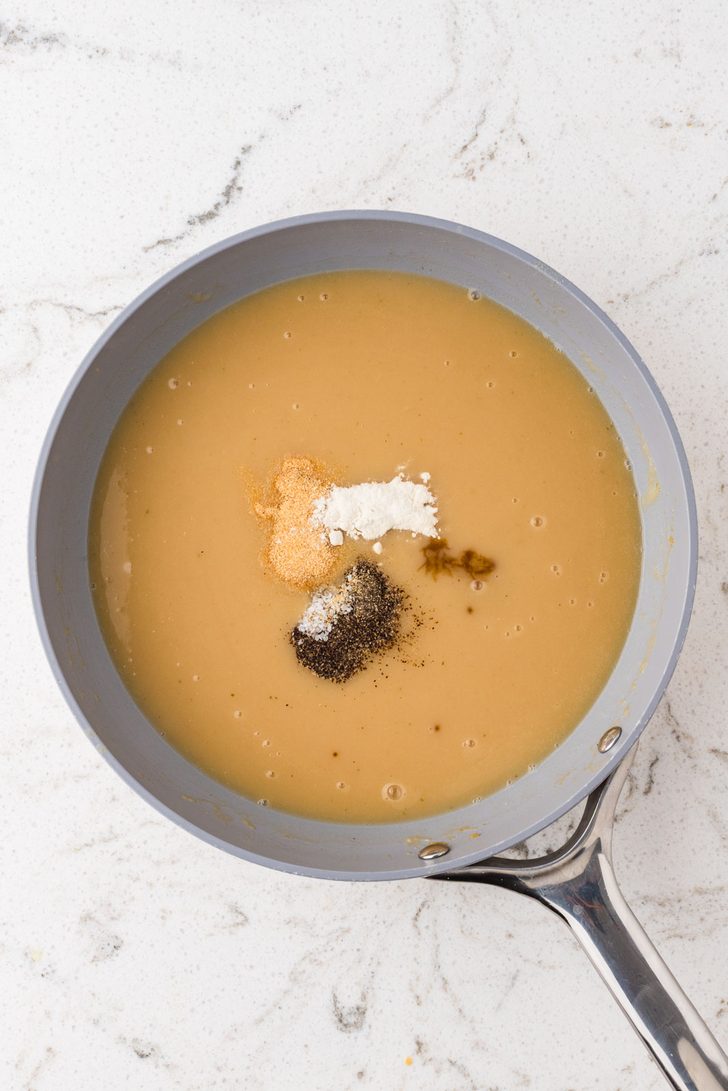
- Whisk in the broth. Once the roux is a deeper brown, slowly pour in about ½ cup of beef stock, whisking constantly until smooth. Add the rest a little at a time, whisking quickly until it’s all in and there are no lumps.
- Add the seasonings. Stir in the Worcestershire sauce, onion powder, garlic powder, pepper, and salt.
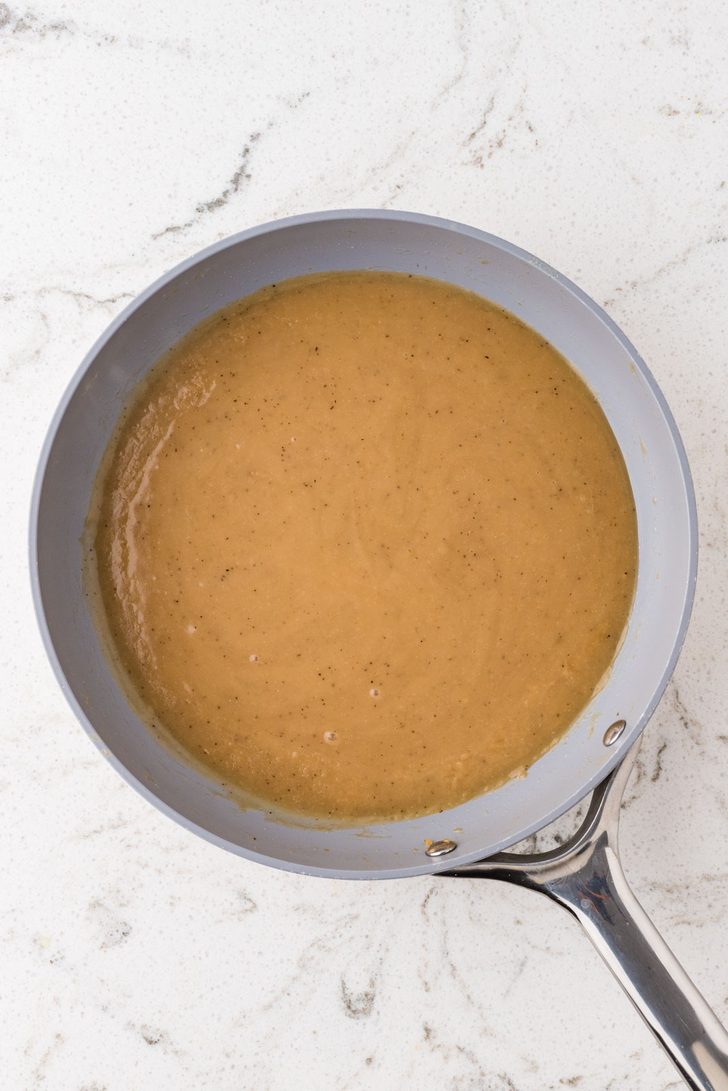
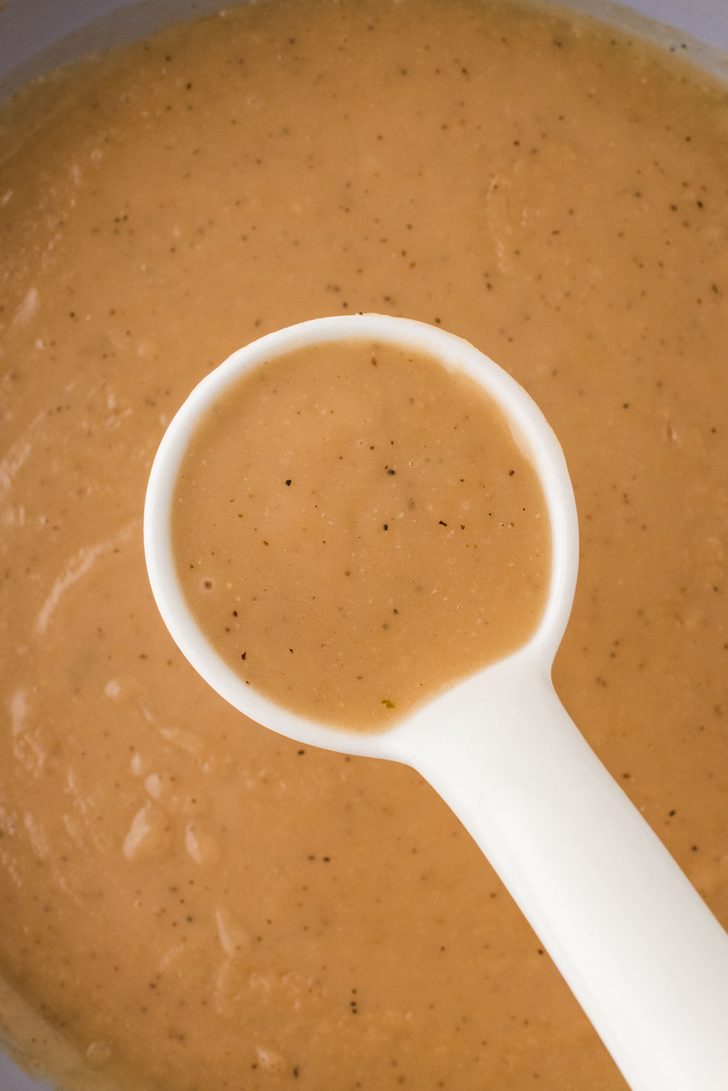
- Simmer until thick. Turn the heat up slightly and bring the gravy to a gentle boil, stirring often. Then reduce the heat to a gentle simmer and cook for 5 to 7 minutes, until it’s smooth, glossy, and thick enough to coat the back of a spoon.
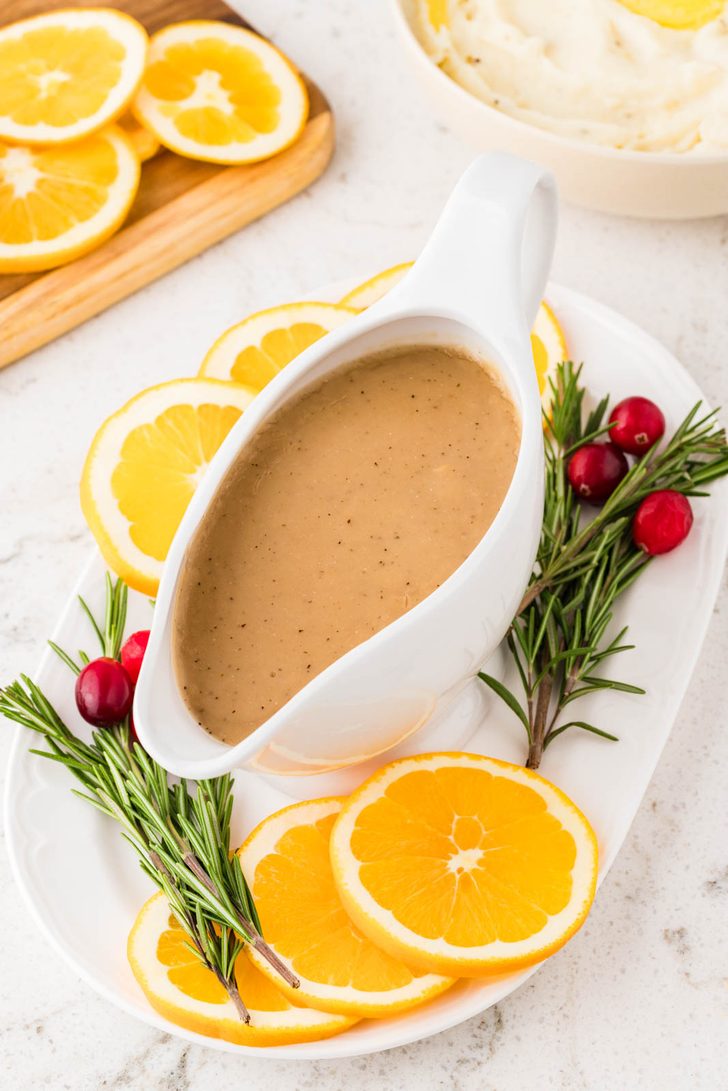
- Taste and serve. Add more salt if it needs it, then take the pan off the heat. Serve warm over mashed potatoes, meatloaf, roast beef, or whatever comfort food is on the table.
How do you know when the roux is dark enough? Look for a deep, rich brown, somewhere past peanut butter and heading toward milk chocolate. It should smell toasty and nutty, never sharp or burnt. If you see black flecks, start over.
Tips for the Best Brown Gravy (and How to Fix Common Problems)
Most gravy trouble comes down to the roux, the broth, or the salt. Here’s how to fix each one.
Why is my brown gravy lumpy?
Lumps happen when the broth goes in too fast. Add it a little at a time and whisk hard after each pour. If you already have lumps, pour the gravy through a fine-mesh strainer or blend it with an immersion blender for a few seconds.
How do I thicken brown gravy that’s too thin?
Simmer it for a few more minutes, since gravy thickens as liquid cooks off and as it cools. For a faster fix, stir 1 tablespoon cornstarch into 1 tablespoon cold water, whisk it into the simmering gravy, and cook for 1 to 2 minutes.
How do I fix gravy that’s too thick?
Whisk in warm beef broth, 1 to 2 tablespoons at a time, until it’s pourable again. Gravy also tightens up as it sits, so loosen it right before serving.
Why isn’t my gravy dark brown?
The color comes from the roux and the stock. Next time, cook the roux a little longer and use a darker stock. In a pinch, a few drops of browning sauce will deepen the color without changing the recipe much.
Why does my gravy taste like flour?
The roux didn’t cook long enough. Keep stirring until it smells toasty and nutty, then give the finished gravy the full 5 to 7 minute simmer.
What if my gravy tastes bitter or burnt?
Burnt flour can’t be fixed, so if the roux has black flecks or a sharp, acrid smell, toss it and start over. Lower the heat a bit and stir constantly on the second try.
My gravy is too salty. Now what?
Whisk in unsalted broth or a splash of water to dilute it, then simmer to bring the thickness back. Next time, use low-sodium broth and add the salt at the end.
My gravy tastes bland.
Add a pinch of salt first, since that’s usually the culprit. If it still needs something, a splash more Worcestershire sauce or a little extra onion powder will usually do it.
A few more tips
- A deeply browned roux thickens a little less than a lighter one, so give the gravy a moment to come together before you decide it’s too thin.
- Taste before you add salt. Broths vary a lot in sodium.
- Keep the gravy warm over very low heat and give it a stir now and then so a skin doesn’t form.
What to Serve With Brown Gravy
Brown gravy is good on just about anything savory. These are the pairings I’d start with:
- Mashed potatoes. The classic.
- Meatloaf. Spoon it over a thick slice.
- Easy One Pan Pork Chops with Potatoes. Drizzle it over the chops and potatoes.
- Slow Cooker Roasted Potatoes and Carrots. An easy way to turn a side dish into comfort food.
- Cornbread Dressing with Sausage, Apples, and Cranberries. A ladle of gravy keeps dressing moist on the plate.
- Roast beef or sliced pot roast.
- Biscuits. Split one and pour the gravy right over it.
- French fries and tater tots. Dunk them, no rules.
Looking for more dinner ideas? Browse all of the dinner recipes and side dishes on the blog.
How to Store, Freeze, Make Ahead, and Reheat Brown Gravy
Refrigerate leftover gravy within 2 hours of cooking, per USDA food safety guidance.
- Refrigerator: Store in an airtight container for 3 to 4 days.
- Freezer: Cool the gravy completely, then freeze it in a freezer-safe container for up to 3 months. Leave a little room at the top for expansion. Flour-thickened gravy can separate slightly after freezing, but whisking as it reheats and adding a splash of liquid brings it right back.
- Make ahead: Make the gravy up to 2 days in advance and refrigerate it until you need it. It will thicken as it cools.
- Reheat: Warm it in a saucepan over medium-low heat, stirring often, until it reaches a low boil. If it’s too thick, whisk in a little beef broth until it’s the consistency you like.
Freezer tip: Freeze the gravy in a Souper Cube or ice cube tray, then move the cubes to a freezer bag. You can warm up just as much as you need, and a cube or two is great for adding richness to soups and stews.
Brown Gravy FAQs
What is brown gravy made of?
Brown gravy is made from a browned roux (equal parts fat and flour) and a beef-flavored liquid, usually beef stock or broth. This version uses butter, all-purpose flour, beef stock, Worcestershire sauce, onion powder, garlic powder, black pepper, and salt.
Can you make brown gravy without drippings?
Yes. This recipe is built for exactly that. A well-browned roux and a good beef stock give you plenty of flavor and color with no roast required.
What gives brown gravy its color?
Mostly the roux. The longer you cook the butter and flour, the darker the gravy gets. A darker beef stock and a splash of Worcestershire sauce help too.
What’s the difference between brown gravy and white gravy?
Brown gravy gets its color and flavor from a browned roux and beef stock. White gravy, like sausage gravy for biscuits, is made with milk or cream and a lighter roux.
What is a roux?
A roux is equal parts fat and flour cooked together in a pan. It thickens sauces and gravies, and the longer you cook it, the darker and nuttier it gets.
Can I use bouillon instead of beef broth?
Yes. Dissolve the bouillon in water following the package directions to make 2¼ cups, then use it like broth. Bouillon is salty, so hold back on the added salt until you’ve tasted the finished gravy.
How much gravy do I need per person?
This recipe makes about 2¼ cups, or 8 to 9 servings of ¼ cup each. For a holiday dinner where everyone pours generously, double it.
Can I double this brown gravy recipe?
Yes. Double every ingredient and use a larger skillet so the roux still browns evenly. The simmer may take a minute or two longer.
Can I make brown gravy ahead of time?
Yes. Refrigerate it for up to 2 days before serving, then reheat it on the stove with a splash of broth to loosen it. Full storage and freezing details are in the section above.
Why do you add Worcestershire sauce to brown gravy?
It adds savory depth and rounds out the beef flavor. One teaspoon is enough to make the gravy taste fuller without making it taste like Worcestershire.
More Recipes to Round Out the Meal
- Easy Yeast Rolls (Soft & Fluffy, Ready in 2 Hours). Perfect for mopping up extra gravy.
- Cornbread Dressing with Sausage, Apples, and Cranberries. A holiday table staple.
- How To Make An Easy And Delicious Corn Souffle (Corn Pudding). A creamy side for the same plate.
- Garlic and Herb Focaccia Bread From Scratch. Another bread worth dipping.
- Slow Cooker Ground Beef Casserole. An easy weeknight dinner that pairs well with gravy on the side.
- Pumpkin Trifle. Dessert, once the gravy boat is empty.
Do you love this recipe? Please leave a 5 star ⭐️⭐️⭐️⭐️⭐️ rating in the recipe card below ⬇️ and/or a review in the comment section further down.
Hungry for more? Follow Suburban Simplicity on Facebook, Instagram, YouTube, and Pinterest to see more DIYs, recipes, and home tips!
Also, don’t forget to sign up for email!
I only send one email a week, and it’ll include my latest recipes, DIYs, and tips, information about exclusive “email only” giveaways, and more! See form below!
Want to subscribe to the Suburban Simplicity Recipe Club? It’s only $5 per month, and you’ll get ad-free PDFs of any new recipes that I post while supporting me at the same time! Join the club, here.

Easy Brown Gravy Recipe
Ingredients
- ¼ cup unsalted butter
- ¼ cup all-purpose flour
- 2¼ cups quality beef stock or broth
- 1 teaspoon Worcestershire sauce
- ½ teaspoon onion powder
- ¼ teaspoon garlic powder
- ¼ teaspoon ground black pepper
- ¼ teaspoon salt, plus more to taste

Instructions
- Melt ¼ cup unsalted butter in a skillet over medium heat. Add ¼ cup all-purpose flour and whisk, scraping the bottom of the pan as you go. The longer you cook the roux, the darker it gets. If you want darker gravy, cook it longer. Keep stirring and don't let it burn!
- Once the roux reaches a deeper brown color, slowly add about ½ cup of beef stock to the roux, whisking continuously until smooth. Gradually add the remaining beef stock, whisking until fully incorporated and free of lumps. You will need to whisk quickly during this step until the full amount of broth is added.
- Stir in 1 teaspoon Worcestershire sauce, ½ teaspoon onion powder, ¼ teaspoon garlic powder, ¼ teaspoon ground black pepper, and ¼ teaspoon salt.
- Increase the heat slightly and bring the gravy to a gentle boil, stirring frequently. Reduce the heat to maintain a gentle simmer and cook for 5–7 minutes, or until smooth, glossy, and thick enough to coat the back of a spoon.
- Taste the gravy and adjust the salt if needed. Remove from the heat and serve warm over mashed potatoes, meatloaf, roast beef, or your favorite comfort food. ENJOY!
Notes
- Don’t rush the roux. The key to developing the gravy’s rich brown color is cooking the butter and flour until deeply browned. Watch the color rather than relying on a fixed cooking time, and avoid burning the flour.
- Use a good-quality beef stock. A rich, flavorful stock makes a noticeable difference in gravy prepared without meat drippings. Darker stock can also contribute to the finished color.
- Using a skillet gives the roux more surface area, making it easier to stir evenly and monitor browning as the color deepens. If using a ceramic-coated skillet, keep the heat moderate and use a silicone whisk to protect the coating.
- Whisk in the stock a little at a time to prevent lumps and create a smooth gravy.
- Watch the consistency. The gravy should be smooth and pourable while coating the back of a spoon. A deeply browned roux may thicken slightly less than a lighter one.